What Is Muskegon Known For? (Lakeshore Highlights + History)
What Muskegon, Michigan is known for: Lake Michigan beaches, the pier light, Michigan's Adventure, USS Silversides, and Bike Time. See the highlights.
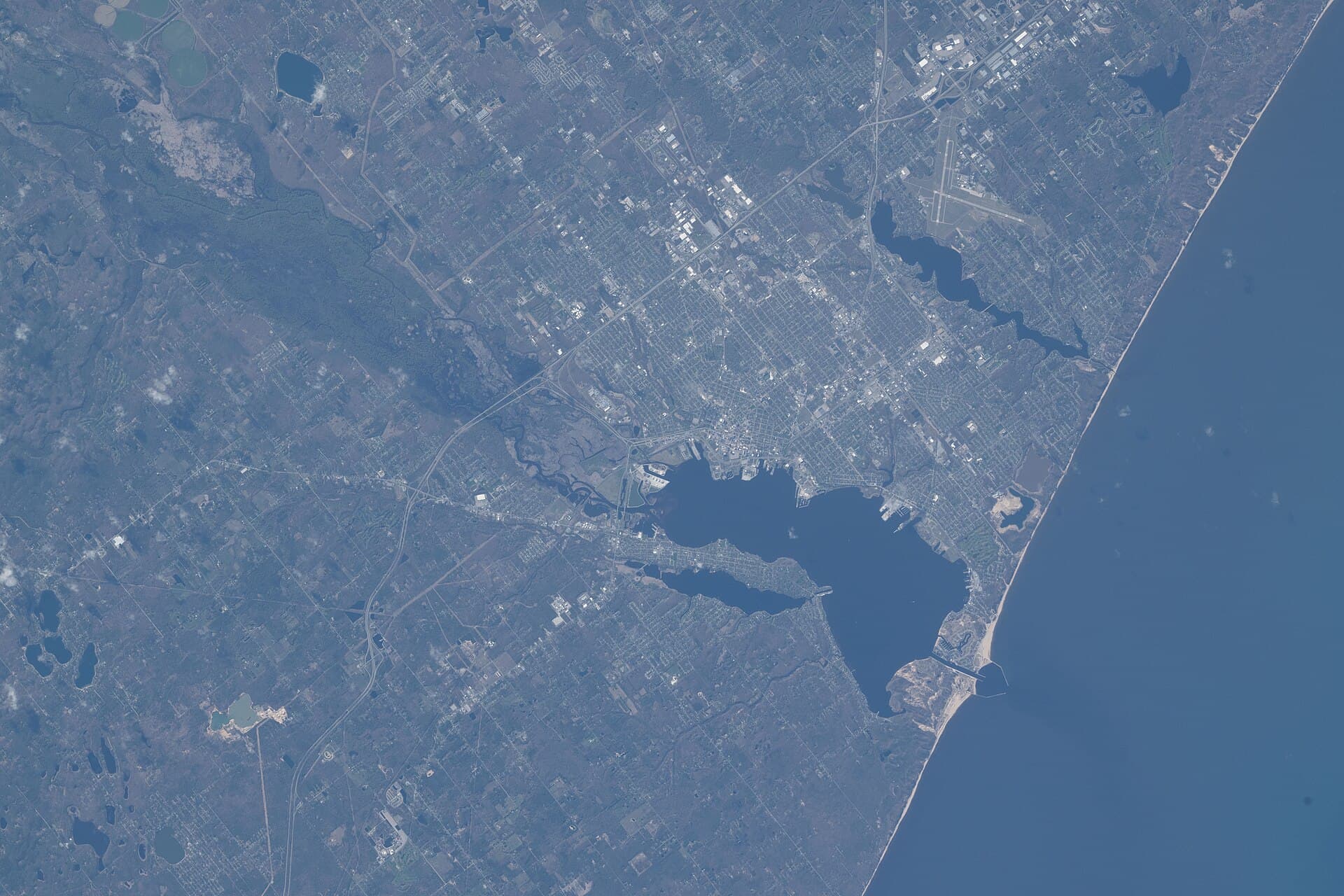
Photo by NASA Johnson Space Center · Public domain via Wikimedia Commons
Muskegon, Michigan is best known for its 26 miles of Lake Michigan shoreline, the red Muskegon South Pierhead Light at Pere Marquette Beach, Michigan’s Adventure amusement park (the largest in the state), the USS Silversides WWII submarine museum, Muskegon Bike Time motorcycle festival, and a lumber-baron industrial history that built the city. It is the largest port city on Michigan’s western shore and the anchor of the West Michigan lakeshore between Grand Haven and Whitehall.
The short answer
Muskegon is known for:
- Lake Michigan beaches, especially Pere Marquette Park, with the red lighthouse pier walk
- Michigan’s Adventure, the state’s largest amusement park, opened 1956
- USS Silversides Submarine Museum, a walk-through decommissioned WWII submarine
- Muskegon Bike Time, a 100,000-visitor motorcycle festival (July 15-19, 2026)
- Lumber-baron history, visible in the Hackley and Hume historic homes and the Lakeshore Museum Center
- The second-largest farmers market in Michigan, at 242 W Western Ave, running Tuesdays/Thursdays/Saturdays
- Hoffmaster and Muskegon State Park dunes, climbing trails with Lake Michigan overlooks
- The Muskegon Lumberjacks, a USHL junior hockey team that reached the 2026 Clark Cup Final
- Pigeon Hill Brewing and Unruly Brewing, anchors of a downtown craft beer row that distributes across West Michigan
- The Burning Foot Beer Festival, a late-August lakeshore beer festival, now at Heritage Landing
What makes Muskegon different from other Michigan lakeshore cities
Compared to Holland (tulip-festival small-town tourism) and Grand Haven (boardwalk shopping and Coast Guard heritage), Muskegon is the working port city of the lakeshore: bigger, more industrial, with more density of attractions inside the actual city limits. It has the only major amusement park, the only WWII submarine, and the only USHL hockey arena in the lakeshore corridor. It also has the largest population of any city on Michigan’s western shore.
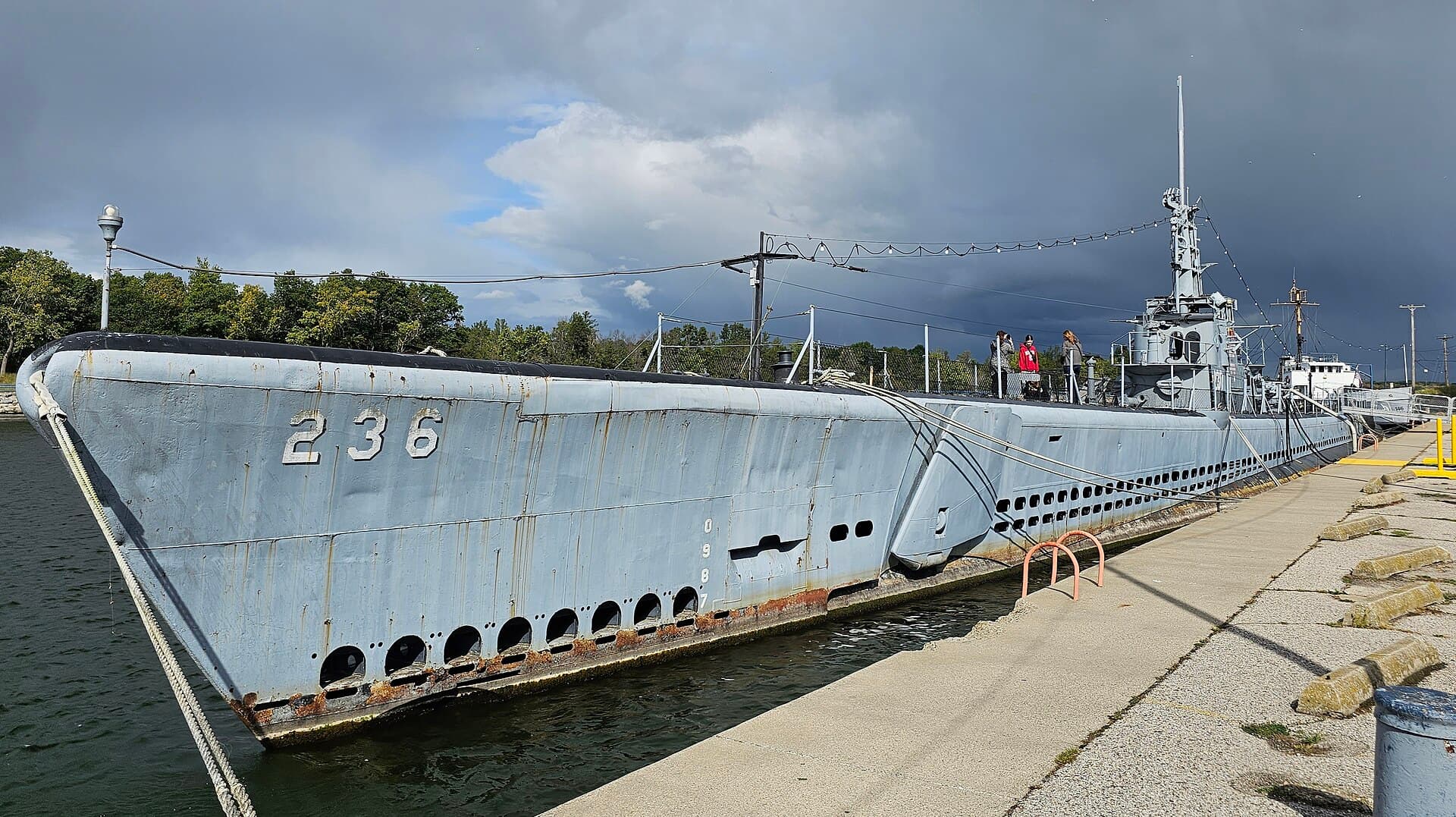
Photo by JJonahJackalope · CC BY-SA 4.0 via Wikimedia Commons
Is Muskegon worth visiting?
Yes. Muskegon packs an unusual density of summer-weekend draws into a small footprint. Pere Marquette Beach and the South Pierhead Light alone justify a half-day visit. Add a downtown brewery row that finally feels alive, Hoffmaster State Park dunes, Michigan’s Adventure, USS Silversides Submarine, and a 2026 festival calendar that runs from May through September, and most visitors leave with a list of things they didn’t get to.
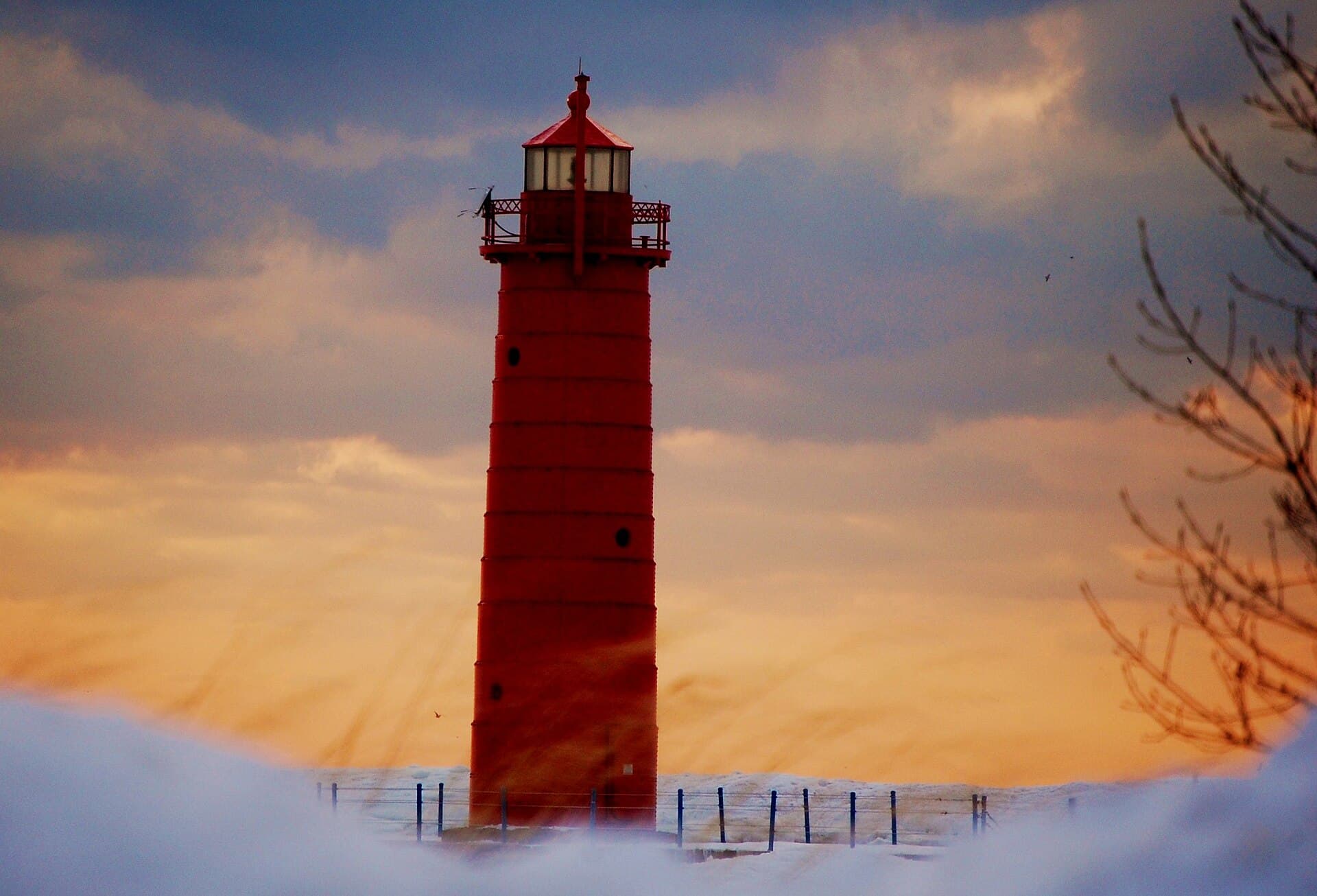
Photo by Krebelo · CC BY-SA 3.0 via Wikimedia Commons
The right length of visit:
- Half-day: Pere Marquette pier walk plus downtown lunch
- Full day: Beach, lighthouse, downtown brewery row, dinner, and sunset
- Weekend: See our 48-hour Muskegon itinerary
- Family week:Beach days plus Michigan’s Adventure plus Hoffmaster dunes plus the rainy-day backup of the submarine and museum row
Muskegon’s history (the one-paragraph version)
Muskegon was named for the Ottawa word for the marshy area around the river. In the late 1800s it was nicknamed the Lumber Queen of the World. At peak, 47 sawmills operated on the banks of Muskegon Lake and the city was one of the largest lumber producers in the United States. When the white pine ran out, Muskegon pivoted to manufacturing (auto parts, machine tools, foundry work) which built the industrial economy of the 20th century. Tourism, healthcare, and small-business have since layered onto that base, and the downtown revival of the 2010s gave the city a second wind.
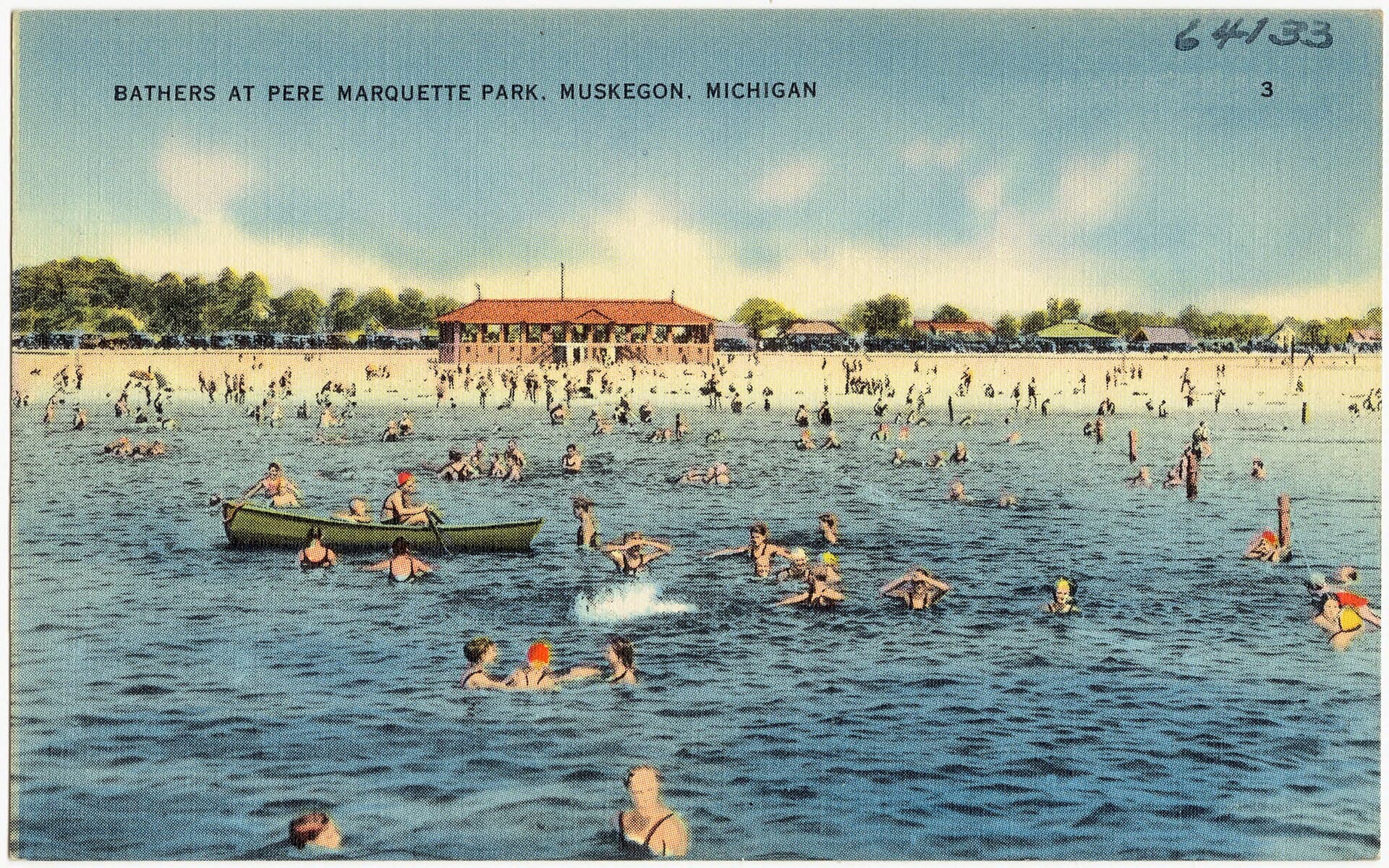
Photo by Tichnor Brothers, Publisher · Public domain via Wikimedia Commons
The Hackley legacy
Lumber baron and philanthropist Charles H. Hackley is the figure most associated with Muskegon’s identity. His late-1800s endowments funded the Hackley Public Library, Hackley Hospital, Hackley Park, and the Hackley House, now part of the Lakeshore Museum Center complex. The downtown park bearing his name is still the city’s festival green and the site of Taste of Muskegon, Lakeshore Art Festival, and Polish Fest.
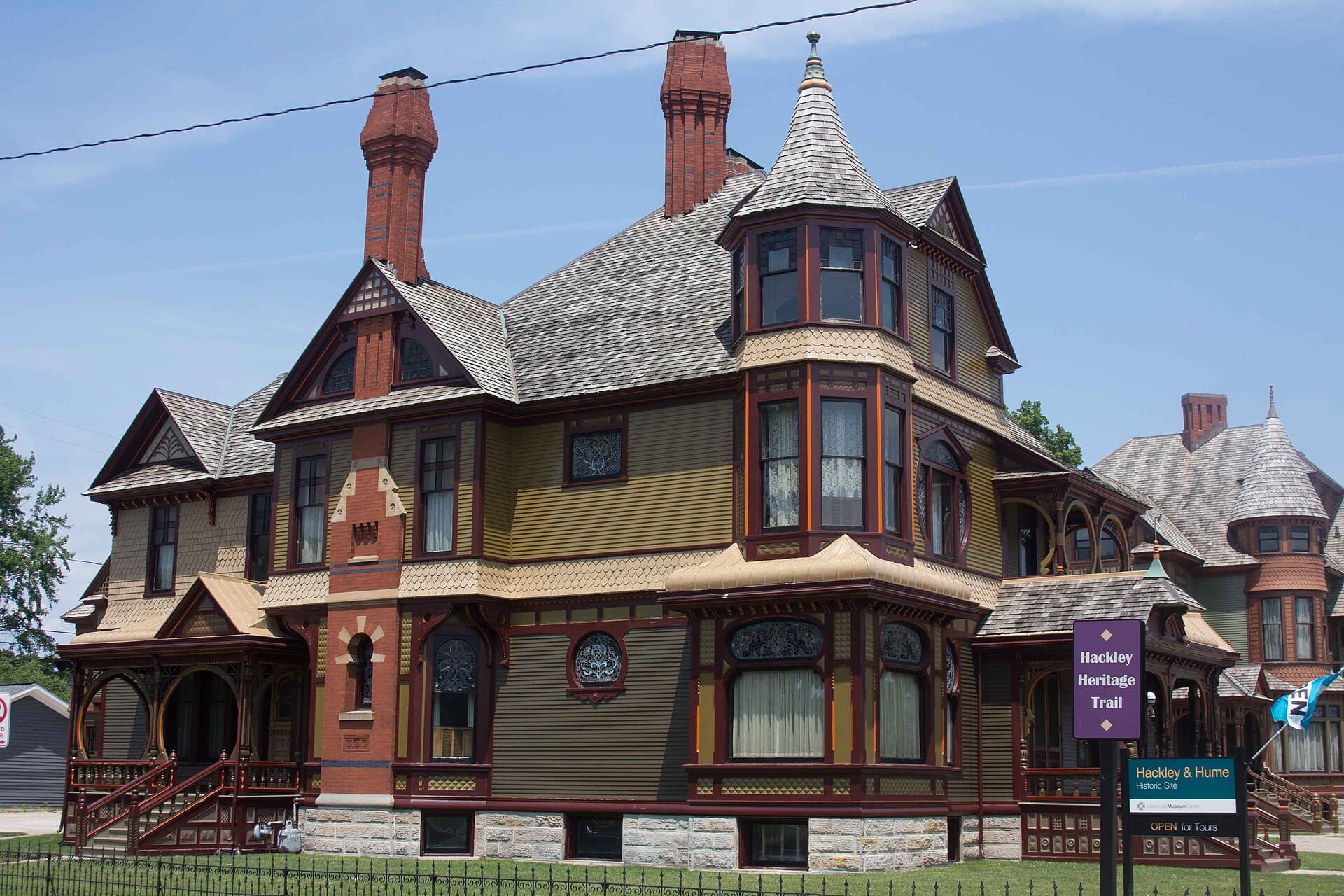
Photo by rossograph · CC BY-SA 3.0 via Wikimedia Commons
What food is Muskegon known for?
Muskegon does not have a single dish the way Detroit has Coney dogs or the UP has pasties, but a few foods are locally beloved:
- Patty’s Pasties at Cherokee Restaurant, the UP-style hand pies, a Muskegon institution since 1969
- Lake perch at the waterfront restaurants (The Lake House, Hanson Hill Waterfront Grill in Whitehall)
- Stuffed hash browns at Getty Street Grill, the local breakfast specialty
- Pigeon Hill Brewing’s LMFAO Stout, the oatmeal-stout calling card from one of Muskegon’s most widely distributed breweries
- Pronto Pups at the Grand Haven channel, the corn-dog stand on South Harbor Drive since 1947 (nearly 80 years), technically outside Muskegon but inside the lakeshore identity
See our full Muskegon restaurants guide for the broader food scene.
What is the best time of year to visit Muskegon?
Mid-June through late August is peak summer: warm Lake Michigan water, full festival calendar, every attraction open. Early June and September are shoulder-season weeks with fewer crowds and lower lodging rates. October is underrated for dune hikes and brewery weekends with fall color. Winter has the Muskegon Luge Adventure Sports Park, Lumberjacks hockey, and cross-country skiing at Muskegon State Park: a different city, but a real one.
How big is Muskegon?
The city of Muskegon proper has about 37,000 residents. Muskegon County total is over 177,000. The Muskegon metro area (combining the city, Muskegon Heights, North Muskegon, Norton Shores, Roosevelt Park, and Fruitport) makes it the largest urban area on Michigan’s western shoreline. It is roughly 40 miles west of Grand Rapids and about 180 miles north of Chicago.
What is downtown Muskegon known for?
Downtown Muskegon is anchored by Hackley Park (the festival green space), Western Ave (the main commercial corridor), the 1929 Frauenthal Center for the performing arts, the Muskegon Museum of Art, and the downtown brewery row anchored by Pigeon Hill (flagship plus the Brewer’s Lounge on 4th St) and Unruly Brewing. It hosts the city’s major events including Taste of Muskegon, Lakeshore Art Festival, Bike Time, Polish Fest, and the weekly Parties in the Park summer concert series.
What is Muskegon Lake known for?
Muskegon Lake is a 4,150-acre inland lake connected to Lake Michigan by a navigable channel. Historically the heart of the city’s lumber and shipping industries, it now anchors a working harbor, recreational boating, paddle sports, the Heritage Landing concert venue, and several waterfront restaurants including The Lake House Waterfront Grille. Boats access Lake Michigan through the channel that runs past Pere Marquette Beach and the lighthouse pier.
Where can I learn more?
For visit planning, see our Muskegon local guides hub: restaurants, breweries, beaches, the events calendar, a 48-hour itinerary, sunset spots, kid activities, and a rainy-day guide. Refreshed monthly so dates and openings stay current.
How this guide is maintained
Refreshed the first week of every month. Population figures, event dates, and notable-business sections all get re-verified. If something on this list has changed or you want to flag a Muskegon claim to fame we missed, email rob@maxx-effect.com.